Most laundry room storage ideas online show a room the size of a small bedroom, with a folding counter, open shelving, and a sink nobody actually has. The real version is a closet with a stacked washer and dryer, or a narrow room barely wide enough to walk through, and the storage has to work around that. This covers laundry room storage ideas by room size, what is actually worth buying, and what most people regret once the detergent runs out and the shelf is still half empty.
The right approach depends heavily on whether the laundry setup is a stacked closet, a narrow galley-style room, or a larger space that also handles coats, shoes, and the stuff that never quite makes it further into the house. The decisions underneath are close to the same across all three, even though the specific fix looks different in each case.
Quick take
Go up and over the machines before buying anything else. Wall space above a washer and dryer is capacity most laundry rooms waste completely. A shelf and a rod handle most of what people actually need. Most laundry rooms need $75 to $300 in the right fixes, not a full built-in cabinet wall.
Table of Contents
The decisions that actually matter
Before buying anything, it helps to separate what the space needs from what looks good in a photo. The best laundry room storage ideas start with the room’s real constraints, not a catalog spread. A laundry room’s job is narrow: hold detergent and supplies within reach, give dirty and clean clothes somewhere to sit that is not the floor, and ideally not force anyone to bend into a cabinet every time they need dryer sheets.
Vertical space over the machines is the first thing worth using, since almost no laundry room fills it on its own. After that, the real question is whether the room needs closed storage (a cabinet with a door, useful for keeping cleaning chemicals out of sight and away from kids or pets) or open storage (a shelf, which is cheaper and faster to load but shows everything). Most laundry rooms end up with a mix of both once you start using the space.
How to organize a laundry room, start to finish
- Take everything off every surface, including the top of the washer and dryer, and sort into keep, donate, and toss.
- Measure the wall space above and beside the machines before buying shelving. A stacked unit and a side-by-side pair leave very different amounts of usable wall.
- Install wall storage first, before putting anything back, so you don’t build the layout around whatever is already sitting there.
- Group by task rather than by item type: a laundry zone (detergent, stain remover, dryer balls), a folding zone, and a catch-all zone for whatever else lives in the room.
- Add a hanging rod or a few hooks last, once the shelving is up, so it goes where it is actually useful rather than wherever there happened to be an open stretch of wall.
Laundry room storage ideas by room type
The right fix depends heavily on how much room the laundry setup actually has, not just on how much stuff needs to fit.
Stacked closet laundry storage ideas
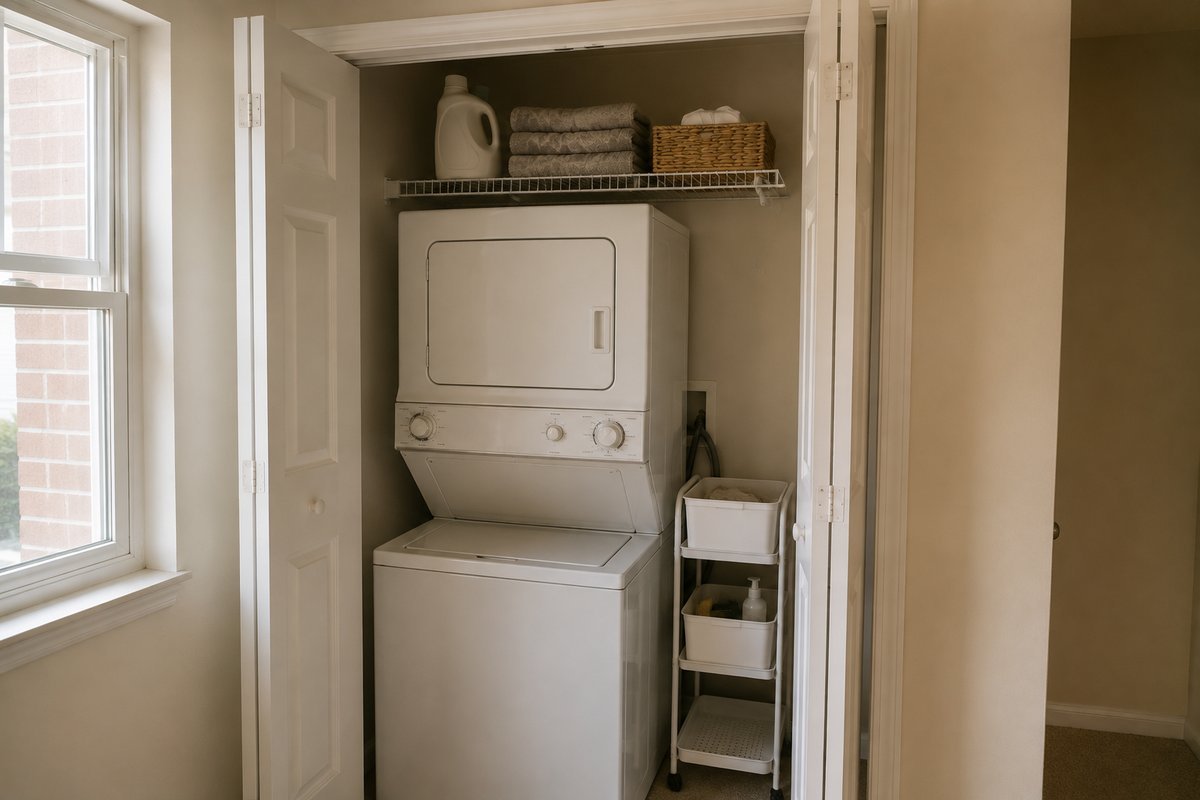
A stacked washer and dryer in a closet leaves almost no floor space and usually one narrow strip of wall beside the machines, if that. A single wire or wood shelf mounted above the stack does most of the work, holding detergent and a basket for dryer sheets and stain sticks within reach without opening a cabinet. A slim rolling cart that fits in the gap beside the machines, when there is one, adds a second surface without mounting anything.
Small dedicated laundry room storage ideas
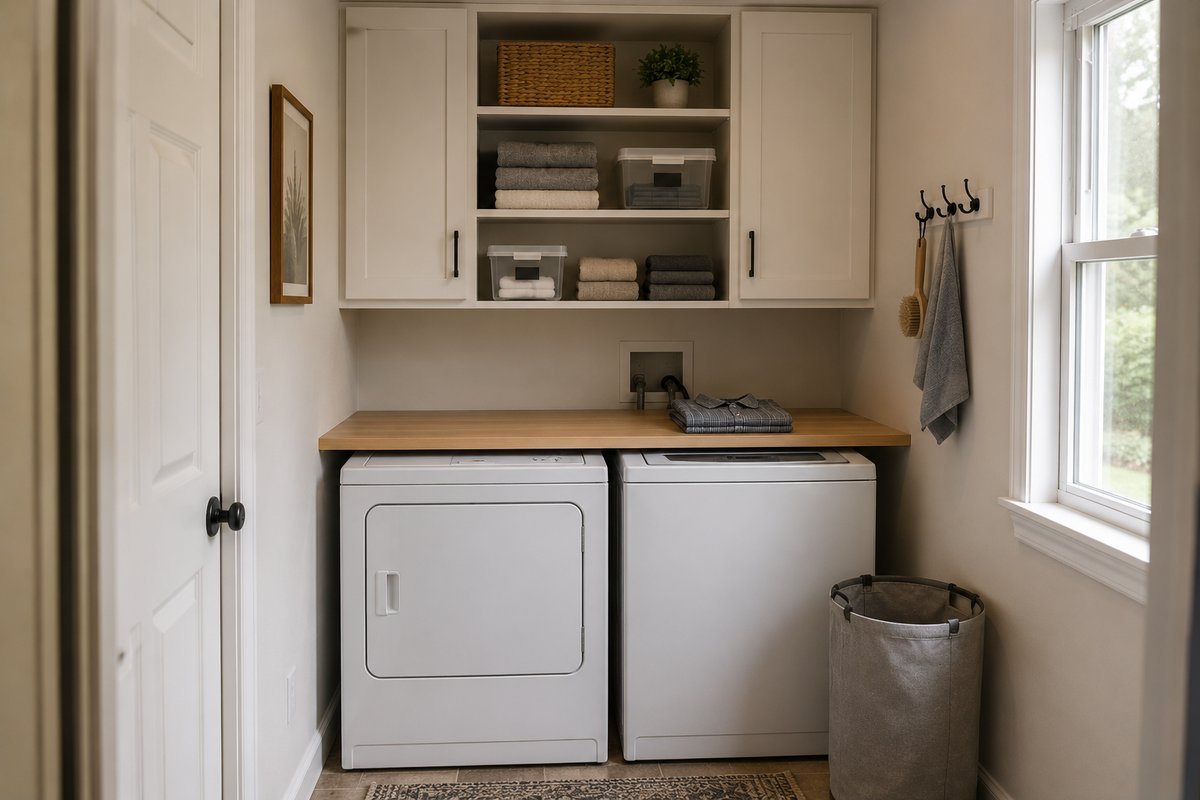
A narrow, galley-style laundry room usually has a full wall above the machines and often a second wall across from them. This is where a proper shelf-and-cabinet combination earns its cost, since there is enough wall to justify it. A folding surface, even a simple board that lays across the top of a front-load pair, makes the room function as an actual workspace instead of just a machine closet.
Laundry room and mudroom combo storage ideas
A laundry room that also catches coats, shoes, and bags needs a different priority order: entry storage comes first, then the laundry function gets built in around it. A bench with cubbies below handles shoes without letting them pile on the floor. Hooks at two heights, one for adults and one lower for kids, keep coats off chairs. Laundry supplies usually end up in a single cabinet or rolling cart, so they stay separate from what people drop on the way in the door.
This combo room is also the one where a floor mat with a boot tray does real work, since it keeps wet or muddy shoes from tracking straight past the washer and into the rest of the house. Keeping that tray near the door rather than tucked beside the machines saves a second cleanup step later.
What is actually worth buying
Not every fix belongs on a shopping list, but these laundry room storage ideas are worth spending money on in almost any layout. A wall shelf above the machines is worth it in almost every laundry room, stacked closet included, since it is the cheapest way to add real capacity without touching the floor.
A closed cabinet is worth it specifically for anything that should stay out of reach of kids or pets, meaning bleach, pods, and other cleaning chemicals, not for towels or dryer sheets that do not need to be locked away. A rolling cart pays for itself in a stacked closet or a rental where nothing can be mounted to the wall, since it adds storage without a single screw.
A hanging rod is worth adding wherever wall space allows it, since air-drying a single load or hanging a shirt straight out of the dryer saves a second trip with the iron. A slim rolling hamper on wheels is worth it in any laundry room that also serves as a hallway, since a stationary basket in a walkway becomes something everyone trips over within a week.
Laundry room shelving materials worth knowing about
Wire shelving is the cheapest option and drains and dries quickly, which matters in a humid room, though it isn’t the easiest surface to keep small bottles upright on. Solid wood or melamine shelving costs more but holds a flat, stable surface for anything that would tip on wire, and it looks less utilitarian if the laundry room is visible from a hallway or kitchen. Metal shelving with a powder-coat finish sits in between on price and holds up best in a laundry room prone to moisture, since it will not warp the way wood eventually can near a steam dryer vent.
Any of these materials supports the same laundry room storage ideas above, just with different tradeoffs in cost and moisture resistance. None of these materials is the wrong choice on its own. The decision usually comes down to whether the shelf needs to survive humidity without warping, which points toward wire or metal, or whether it needs to look finished in a room guests actually see, which points toward wood or melamine.
Laundry room storage ideas for detergent and small supplies
The shelf above the machines solves the big-picture storage problem, but detergent pods, dryer sheets, stain sticks, and a spare bottle of fabric softener still need a specific home, or they end up loose and sliding around every time the dryer door opens. A set of matching clear or labeled bins, one per category, keeps that shelf from turning into a junk drawer with a view. Decanting bulk detergent into a smaller pump bottle also saves real shelf depth compared to storing the original jug, which matters most in a stacked closet where every inch of shelf is already accounted for.
Because laundry pods look enough like candy to interest a toddler or pet, Poison Control recommends keeping them in their original container, out of reach and out of sight, rather than transferring them into an open bin. A small caddy or bin specifically for stain treatment, kept separate from everyday detergent, is worth the few dollars it costs. Stain sticks and pre-treatment sprays get used in a hurry, right before something goes in the wash, and hunting through a shelf of look-alike bottles defeats the purpose of having organized the shelf in the first place.
Laundry room storage systems: kit or build your own
A packaged wall shelving kit costs more per square foot of storage than building the same thing from a single board and a pair of brackets, but it takes less time and comes with hardware already sized correctly. Building a shelf from a cut board and hardware-store brackets costs roughly a third of a comparable packaged kit, and the skill required is genuinely minimal: level, drill, done.
A full cabinet system, whether packaged or custom-built, only makes sense in a laundry room with enough wall space to use it, and it is the one upgrade on this list that is easy to overbuy. A single shelf and a rod solve most laundry rooms’ real problems for a fraction of the cost, and a cabinet wall is worth adding later if the room still feels short on storage once the cheap fixes are in place.
Budget-friendly laundry room storage ideas, by tier
Under $50: A tension rod mounted between two walls or cabinet sides for hanging air-dry items. Adhesive hooks for lightweight items like a lint roller or a spray bottle. A stackable set of clear bins for detergent pods, dryer sheets, and stain sticks that would otherwise clutter a shelf.
$50 to $150: A single wall shelf with brackets, sized to the space above the machines. A rolling laundry cart with bins for sorting whites, darks, and delicates before they go in. A basic pegboard section for hanging a broom, dustpan, and iron.
$150 to $300: A shelf-and-cabinet combination unit that spans the width above a side-by-side washer and dryer. A fold-down or slide-out folding counter, useful specifically in a room too narrow for a permanent table. A slim cabinet tower for the gap beside the machines, where one exists.
$300 and up: A full wall of matching cabinetry with a built-in folding counter, typically only worth it in a dedicated laundry room with enough square footage to make the counter usable rather than decorative.
What we would skip
Not every laundry room storage idea on the market is worth the money or the effort. A full custom cabinet wall in a stacked closet, since there is rarely enough width to make it functional rather than just expensive. A dedicated over-the-washer shelf marketed specifically for one brand of machine, since a standard adjustable shelf fits nearly any washer and usually costs less.
A large decorative laundry sign or open crate system meant purely for display, since it takes up wall space that would otherwise hold something the room actually needs. A built-in laundry chute is another one worth skipping in most retrofit situations, since cutting through existing walls and floors to add one rarely justifies the cost compared to just carrying a hamper.
How long a laundry room storage project actually holds up
A properly mounted wall shelf, secured into studs rather than drywall anchors alone, holds up for as long as the laundry room is in use, with no real maintenance beyond an occasional wipe-down. Rolling carts hold up well too, though the wheels are the first thing to wear out on a cart moved daily, usually in the range of two to four years depending on the floor surface. Adhesive hooks are the shortest-lived option here: they hold for months in a humid laundry room rather than years, since the moisture in the air works against the adhesive over time.
Cabinet hardware, meaning hinges and drawer slides, is the part of a built cabinet system most likely to need attention before the cabinet itself wears out. Cheap hinges sag within a couple of years in a room that sees daily use, so it is worth spending a bit more on the hardware specifically even when building a budget cabinet from scratch. The cabinet box itself, whether store-bought or built at home, tends to outlast the hardware holding its doors on by a wide margin.
Laundry room storage ideas that get the whole household involved
A laundry room only stays organized if everyone using it can find things without asking. Labeling bins by category, rather than relying on memory, works especially well for kids, since a bin labeled “socks” or “school uniforms” gets used correctly even by someone too young to have learned the household’s unwritten system. A low hook or basket at kid height for putting away their own folded clothes turns laundry from a chore that lands entirely on one person into something the household actually shares.
Color-coded bins per family member solve a related but different problem: sorting clean laundry back to the right bedroom without it sitting in a pile on the laundry room floor for a week. This only pays off in a household with more than two or three people doing laundry in a shared machine, since the sorting overhead isn’t worth it for a single person or a couple.
Common laundry room storage mistakes
Some laundry room storage ideas fail not because of the product but because of how they get installed or chosen in the first place. These are the mistakes that show up most often.
Buying a full cabinet system before measuring the actual wall space above the machines, which leads to cabinet doors that will not fully open. Mounting shelving into drywall alone rather than studs, which fails once the shelf is loaded with anything heavier than a box of detergent pods. Skipping a rod or hooks entirely and letting clean, air-dry items pile on top of the dryer instead. Buying decorative bins before functional ones, so the room looks organized in a photo, but nothing actually has a designated spot.
Renter-friendly laundry room storage ideas
A rented apartment or house usually rules out drilling permanent shelving into someone else’s wall. A rolling cart handles most of what a wall shelf would, without a single screw, and it goes with you when the lease ends. A tension rod between two walls or cabinet sides provides hanging space without any hardware.
Command-style adhesive hooks handle light items, though in a humid laundry room they are worth checking every few months rather than assuming they will hold indefinitely. The sorting and zoning steps cost nothing and carry over identically to the next place, which is why they are worth doing even in a laundry room that might only be home for a year.
For a closer look at storage decisions across small spaces generally, see the Small-Space & Laundry Storage hub.
Frequently asked questions
What is the best way to organize a laundry room?
Empty every surface completely, sort supplies into what you use weekly versus rarely, then rebuild starting with wall space above the machines before adding anything to the floor. Zone by task (laundry supplies, folding, catch-all) rather than by item type, and add a rod or hooks last. These laundry room storage ideas work the same way whether the room is a stacked closet or a full-size space.
What are common laundry room storage mistakes?
Buying a full cabinet system before measuring the actual wall space, mounting shelving into drywall instead of studs, skipping a rod or hooks and letting clean items pile up, and buying decorative bins before functional ones.
How do I add storage to a small laundry closet?
Start with a single shelf mounted above the stacked machines, sized to the closet’s exact width. Add a slim rolling cart in any leftover gap beside the machines rather than a fixed shelf, since a cart works in tighter spaces where a shelf bracket would not fit. Skip a full cabinet system unless the closet is genuinely wide enough to open its doors without hitting the machines.
What storage works best above a washer and dryer?
A single wall shelf mounted into studs handles most laundry rooms’ needs on its own. A shelf-and-cabinet combination is worth the extra cost specifically for households that need to keep cleaning chemicals out of reach, since the closed cabinet section solves that in a way open shelving cannot.
Should laundry room shelving be wire, wood, or metal?
Wire drains and dries fastest, which suits a humid room, but does not hold small bottles upright as well as a flat surface. Wood or melamine looks more finished and holds bottles flat, but can warp over time near a steam dryer vent. Powder-coated metal splits the difference: it costs more than wire, handles moisture better than wood, and stays flat under a loaded shelf.