
Most garage shelving ideas online show a garage with one car, no clutter, and a wall of matching cabinets nobody owns yet. The real version has two cars fighting for space with a lawnmower, half-used paint cans, and a wall that has never held a single shelf. This covers garage shelving ideas by type and garage size, what is worth buying, and the weight capacity mistake that makes a shelf come down mid-season.
The right shelving depends heavily on what the garage needs to hold and how much wall or ceiling space you have, not just how a system looks in a showroom photo. A single wall-mounted shelf, a full freestanding unit, and an overhead track system solve different problems, and picking the wrong one for the space wastes money either way.
Shelving capacity depends on the type: light-duty wire or plastic shelving holds about 250 pounds per shelf, standard steel wire shelving about 600 pounds per shelf. Heavy-duty steel or boltless rivet shelving (shelves that lock together without bolts) holds up to 1,500 pounds per shelf, and extra heavy-duty steel up to 2,000 pounds per shelf. Each figure assumes the unit is anchored into wall studs rather than drywall alone, per The Hardware Post's garage shelving guide.
Quick take
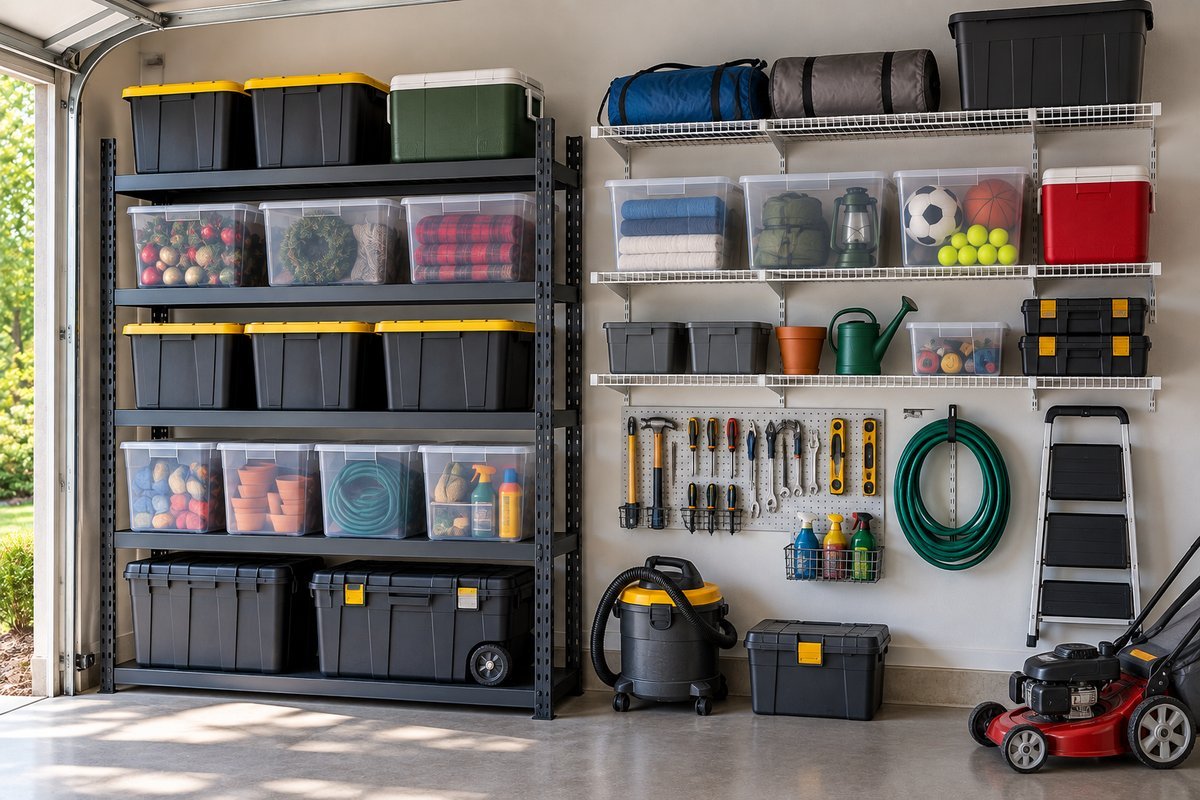
Match the shelving to the weight it will carry, not the cheapest option on the shelf. Wall-mounted shelving into studs handles most household storage, freestanding heavy-duty units earn their cost for power tools and bulk supplies, and overhead track systems are worth it mainly for seasonal items that leave the floor entirely. Most garages need $75 to $250 in the right shelving, not a full built-in wall.
Budget option
Under $50 covers a single wire or wood shelf bracket set, a handful of heavy-duty hooks, and stackable bins sized to an existing shelf, enough to fix most garages' first storage problem.
Free tool
Not sure how much weight your garage shelves can safely hold? Use the garage shelf weight capacity planner to check your shelving against your actual load before you stack it.
Free tool
Not sure what bin size fits your shelf? Use the storage bin size and fit calculator to check tote sizes against your garage, closet, pantry, or under-bed space before you buy.
Table of Contents
What matters before you buy shelving
Before buying anything, it helps to separate what the garage needs to hold from what looks good in a showroom. Start with an inventory: power tools, seasonal decorations, sports equipment, paint cans, and the bin of cables nobody has sorted in years all need different things from a shelf.
Weight comes first, not looks. A shelf rated for 50 pounds per shelf holds paint cans and small bins fine but sags or fails under a car battery, a full toolbox, or a stack of moving boxes. Matching the shelving's rated capacity to what will sit on it prevents the single most common garage shelving failure.
How to plan garage shelving, start to finish
- Clear the garage floor and sort everything into keep, donate, and toss before measuring a single wall.
- Find and mark the wall studs where shelving will go, since anchors alone will not hold real garage-weight items long term.
- Group items by weight and frequency of use: heavy and rarely used goes up high or overhead. Light and frequently used stays at reach height.
- Install the heaviest-duty shelving first, since lighter units are easier to place around it than the reverse.
- Leave a clear walking path and enough clearance for a car door to fully open before finalizing where each unit goes.
Garage shelving ideas by type
The right type depends on what you need to store and how much floor space you can give up.
Wall-mounted garage shelving ideas
A wall-mounted shelf bolted into studs is the cheapest way to add real capacity without losing any floor space, and it handles most household overflow: paint, small tools, cleaning supplies, and bins of seasonal items. It works in nearly any garage size, since it needs only a stretch of open wall rather than floor space.
Freestanding heavy-duty garage shelving ideas
A freestanding steel shelving unit holds far more weight per shelf than most wall-mounted options, often 200 pounds or more per shelf. That makes it the right call for power tools, bulk supplies, or a full set of car maintenance gear. It costs floor space for that capacity, so it fits best in a garage with a wall or corner that isn't otherwise usable for parking or walking.
Overhead and ceiling-mounted garage shelving ideas
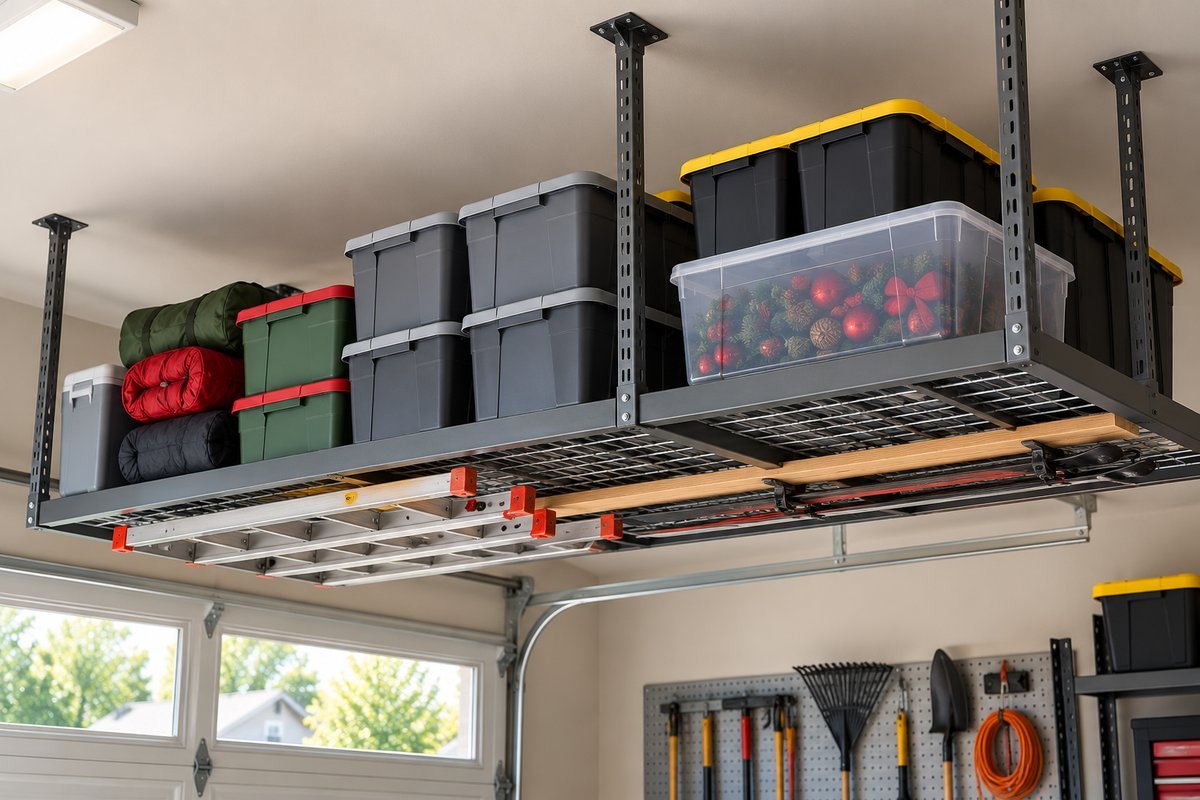
Overhead track shelving uses space that almost no other system touches: the ceiling above where a car parks. It is the best fit for seasonal items (holiday decorations, camping gear used twice a year), since getting something down requires a stepladder every time. It is the wrong fit for anything you reach often, since the friction of climbing up every week defeats the purpose of organizing in the first place.
Which shelving type fits your garage
A quick reference for matching what you need to store to the system worth building, before spending money on the wrong one.
| What you are storing | Best shelving type | Typical cost |
|---|---|---|
| Everyday household overflow | Wall-mounted shelving into studs | $40 to $120 |
| Power tools and bulk supplies | Freestanding heavy-duty steel | $100 to $300 |
| Seasonal or rarely used items | Overhead track shelving | $150 to $400 |
What is worth buying
Not every fix belongs on a shopping list, but these are worth spending money on in almost any layout. A single heavy-duty wall shelf above a workbench is worth it in nearly every garage, since it is the cheapest way to clear a work surface without losing anything to the floor.
A freestanding steel unit is worth the cost for anything heavy that would otherwise sit directly on the floor, since it gets weight off concrete, where moisture and rolling items cause the most damage. Overhead track shelving is worth adding once wall and floor space both run out, not before, since it is the most expensive option per square foot of what it holds.
Garage shelving materials worth knowing about
Powder-coated (a tough baked-on paint finish) steel is the most common material for real garage-duty shelving, since it resists the moisture, temperature swings, and occasional spill that a garage sees far more of than an interior closet. Wire shelving costs less and drains and dries quickly if anything wet ends up on it, though it does not hold small, irregularly shaped items as well as a flat shelf. Plastic resin shelving is the lightest and cheapest option and won't rust, but it sags under real weight faster than steel or wood, which limits it to lighter storage.
None of these materials is the wrong choice on its own. The decision comes down to whether the garage runs damp or humid, which points toward steel or wire, or whether the load is light, which is the one case where plastic resin makes sense.
Weight capacity and mounting that holds up
A shelf's listed weight rating almost always assumes even distribution across the whole shelf, not one heavy item sitting in the center. A single car battery or a full paint can concentrates weight in a small area, which can stress a shelf well below its stated capacity if it isn't rated for point loads.
Mounting into wall studs, rather than drywall anchors alone, determines whether wall-mounted shelving holds up under real garage weight. Independent testing of drywall anchors shows even heavy-duty anchors topping out well below what a single stud can support. That is why a stud finder and a level, used before a single screw goes in, prevent the single most common wall-mounted shelving failure: a shelf that looked secure for a few months before pulling loose from drywall.
Garage shelving ideas by garage size
A one-car garage has the least wall space to spare, so wall-mounted and overhead shelving do most of the work, keeping the floor clear enough to park. A two-car garage usually has at least one wall not competing with a vehicle door, which is where a freestanding heavy-duty unit earns its floor space without getting in the way. A garage with no car parked in it at all, used purely for storage or as a workshop, can support a full wall of freestanding shelving plus overhead track storage. It does not have the walking-room limits the other two sizes face.
Budget-friendly garage shelving ideas, by tier
Under $50: A single wire or wood shelf bracket set for one wall section. A handful of heavy-duty hooks for hanging tools or a bike. Stackable bins sized to fit an existing shelf rather than a full new unit.
$50 to $150: A basic freestanding wire or steel shelving unit, four to five shelves. A wall-mounted shelving kit spanning a full section of garage wall. A slatwall (wall panels with grooves that hold hooks and shelves) or pegboard panel with hooks for hand tools.
$150 to $300: A heavy-duty steel freestanding unit rated for 200-plus pounds per shelf. A basic overhead track shelving kit sized for one bay. A full wall shelving system spanning both sides of a workbench.
$300 and up: A full overhead track system spanning the garage ceiling, typically only worth it once wall and freestanding options are already maxed out.
What we would skip
Not every shelving product on the market is worth the money or the effort. A full overhead track system installed before you even use the wall space, since it is the most expensive option per square foot and rarely the first thing a garage needs. Decorative shelving units built for a showroom photo rather than rated for real garage weight, since a shelf that cannot hold a car battery or a full toolbox is not solving the real problem.
A shelving system sized without measuring the garage door track and opener first is also worth skipping in its current form. Installing overhead shelving too close to a garage door opener's travel path is a common and entirely avoidable mistake.
How long garage shelving holds up
Powder-coated steel shelving properly mounted into studs can last as long as the garage is in use, with rust resistance that generally outlasts the hardware holding it to the wall. Wire shelving holds up nearly as long, though the coating can wear at contact points over years of heavy items sliding on and off. Plastic resin shelving is the shortest-lived of the three under real garage conditions, typically sagging or cracking within a few years if it regularly holds more than light storage.
Overhead track systems, once installed correctly into ceiling joists (the wood beams that hold up a floor or ceiling) rather than drywall alone, hold up indefinitely with essentially no maintenance. Nothing on them gets handled often enough to wear down hardware the way daily-use shelving does.
Common garage shelving mistakes
Some shelving setups fail not because of the product, but because of how they're chosen or installed in the first place. These mistakes show up most often.
Buying shelving rated for light household use and loading it with power tools or car parts anyway. Mounting into drywall alone instead of studs, which fails under real weight within months rather than years. Installing overhead track shelving without first checking clearance for the garage door opener's travel path. Filling every shelf floor to ceiling before leaving a clear walking path and door-swing clearance.
Renter-friendly garage shelving ideas
A rented house or apartment with a garage usually rules out drilling permanent shelving into someone else's studs without asking first. A freestanding heavy-duty shelving unit adds real capacity without a single screw and moves with you when the lease ends. Stackable bins on the floor handle overflow in the meantime, though they give up the moisture protection a raised shelf provides.
If the lease allows any wall mounting at all, ask specifically about the garage rather than assuming the same rules as the interior of the unit apply, since some landlords treat a garage's walls differently from a bedroom's. The sorting and weight-grouping steps cost nothing and carry over the same way to the next place.
For a closer look at storage decisions across the rest of the garage, see the Garage Storage & Organization hub.
Frequently asked questions
What is the best way to add shelving to a garage?
Start with a wall-mounted shelf bolted into studs above a workbench or along one open wall, since it adds capacity without losing floor space. Add a freestanding heavy-duty unit for anything too heavy for wall shelving, and save overhead track storage for seasonal items once you've used up wall and floor options.
How much weight can garage shelving hold?
It depends entirely on the shelving type and mounting. Light-duty wall shelving into drywall anchors alone might hold 25 to 50 pounds evenly distributed, while heavy-duty freestanding steel rated for garage use can hold 200 pounds or more per shelf. Mounting into studs rather than drywall alone significantly increases real-world capacity, regardless of the shelf's listed rating.
Should garage shelving be wire, wood, steel, or plastic?
Powder-coated steel holds the most weight and best resists a garage's moisture and temperature swings, making it the standard choice for anything heavy. Wire drains and dries quickly if something wet ends up on it. Plastic resin is the lightest and rust-proof but sags under real weight faster than the other options, limiting it to light-duty storage.
Is overhead garage shelving worth it?
Overhead track shelving is worth it for seasonal items you access a few times a year, since it uses ceiling space that almost nothing else touches. It generally isn't worth buying first if you already have wall and freestanding shelving, since it costs more per square foot of storage and requires a stepladder every time you pull something down.