Most pantry advice starts with bins. Buy matching containers, decant the cereal, done. That skips the part that actually determines whether a pantry works: the shelving underneath all those bins. Wrong depth, wrong spacing, or the wrong material, and no amount of labeling fixes it. Shelves set too deep swallow small jars at the back. Shelves spaced too far apart waste a third of the vertical space in the closet. Wire shelving in the wrong spot lets skinny bottles tip through the gaps.
This is about the shelving itself: what depth and spacing actually work, which materials hold up under real grocery weight, and which pantry shelving ideas are worth the money versus which ones are a bin company’s marketing copy. If the pantry is already organized into zones and just needs better bones underneath, this is the fix.
Quick take
Depth matters more than material. Shelves deeper than 12 to 14 inches hide things in the back, no matter what they’re made from. Adjustable wire or ventilated shelving beats fixed wood for most pantries because it lets spacing change as needs change. Most pantry shelving projects run $60 to $300, not the $1,000-plus a full custom build-out costs.
Table of Contents
The decisions that actually matter
Before buying anything, get these five decisions right. The pantry shelving ideas below only work if these fundamentals are right first. Get them wrong and even expensive shelving underperforms.
- Measure the depth you actually have. Most reach-in pantries run 12 to 16 inches deep. Anything past 14 inches needs a plan for the back few inches, whether that’s a lazy susan, a pull-out, or accepting that the back zone is for backstock only.
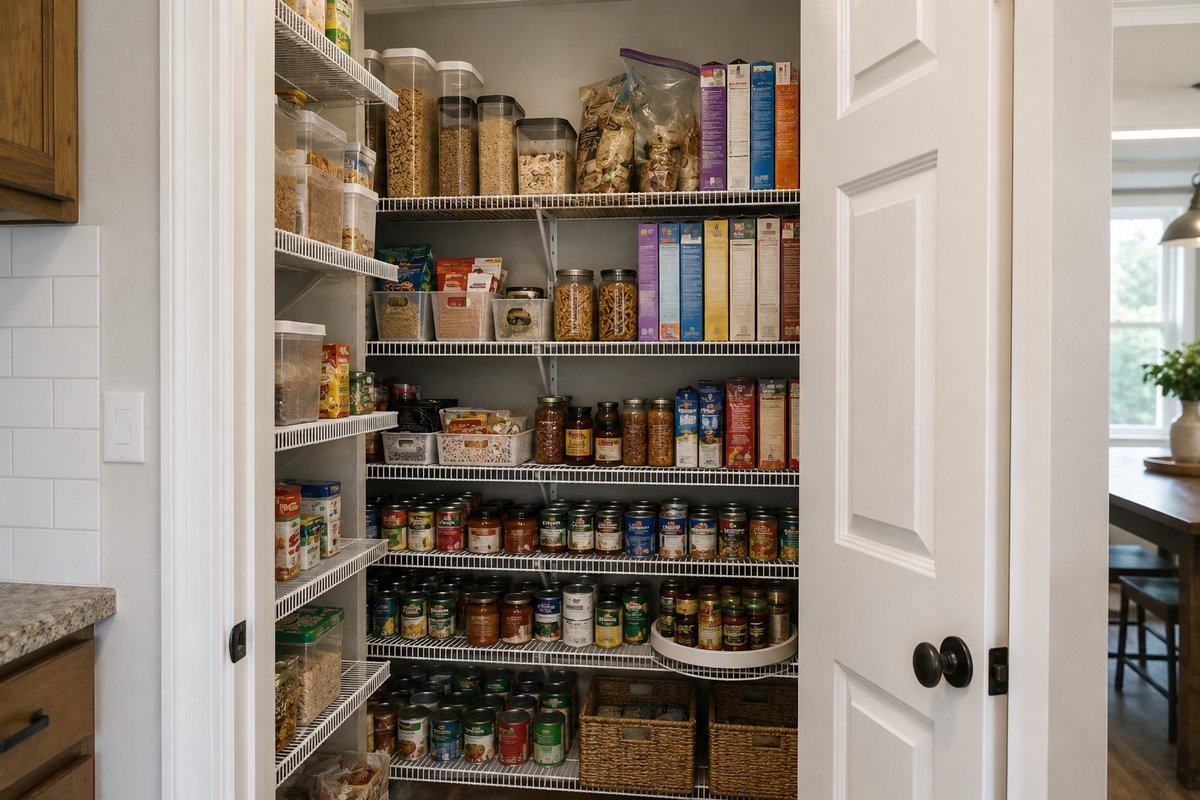
- Plan spacing by category, not evenly. Canned goods need about 6 inches of clearance. Cereal boxes and bulk bags need 12 or more. Spacing every shelf the same 10 inches apart wastes space in the can zone and cramps the box zone.
- Pick a material rated for the load. A fully stocked shelf of canned goods and glass jars is heavier than most people expect, often 40 to 60 pounds per linear foot. Thin melamine or unsupported particleboard sags under that within a year or two.
- Decide on adjustable versus fixed before installing. Adjustable track or wire systems cost a bit more up front but let spacing change as grocery habits change. Fixed shelving is cheaper and sturdier per dollar, but it’s a one-time decision.
- Handle corners and dead zones separately. A corner pantry or an L-shaped layout has at least one zone that standard straight shelving can’t reach well. Plan that zone with a lazy susan, a corner unit, or simply as low-priority backstock space before buying shelving for the rest.
Pantry shelving ideas by pantry type
The right shelving setup depends heavily on the pantry’s shape. A few of the most common layouts, and what tends to work in each.
Reach-in pantry shelving ideas
A reach-in pantry, the standard closet-style setup most kitchens have, does best with adjustable wire or ventilated shelving on a track system. Track systems let shelves move up or down without drilling new holes, which matters because grocery habits shift more than people expect over a year. Keep shelf spacing tighter near the bottom, where canned goods and heavier items belong, and looser near the top for boxes and bulk items used less often.
Walk-in pantry shelving ideas
A walk-in pantry can support shelving on more than one wall, which opens up options a reach-in doesn’t have. Put deeper, sturdier shelving (14 to 16 inches, wood or a heavier-duty wire system) on the wall that holds bulk and backstock, and shallower shelving (8 to 10 inches) on a second wall for everyday items you need to see at a glance. Floor space in a walk-in is often wasted on a single freestanding shelf unit when a second wall of fixed shelving would hold more and look more intentional.
Corner pantry shelving ideas
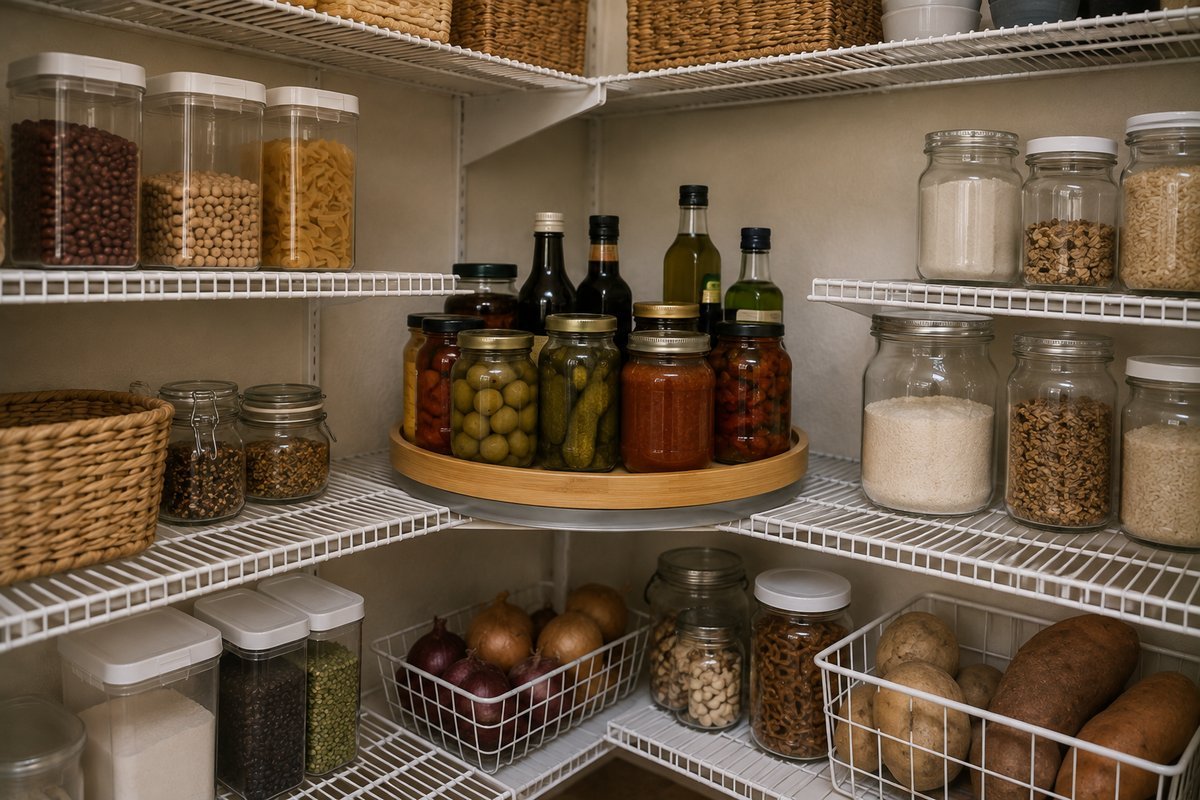
Corner pantries lose real storage to the dead zone where two walls meet, the same problem corner kitchen cabinets have. A lazy susan sized to the corner reclaims most of that space for round or short items. For taller corner sections, angled or pie-cut shelving costs more but uses the space better than a lazy susan alone. If the budget doesn’t stretch that far, treating the corner as low-turnover backstock space for canned goods that don’t need to be seen daily is a reasonable compromise.
What is actually worth buying
A short list of pantry shelving components that earn their cost, based on what actually changes how a pantry functions rather than just how it photographs. These are the pantry shelving ideas worth spending real money on.
An adjustable wire or track shelving kit. This is the single highest-impact purchase for most reach-in pantries. Being able to move a shelf up two inches when a new appliance box needs the room is worth more over time than any bin.
A lazy susan for corner or deep-shelf zones. Anywhere shelving goes past 14 inches deep, a lazy susan turns a dead back zone into usable, visible space instead of a place where things get forgotten.
A slim pull-out drawer or basket for narrow gaps. The 4 to 6 inch gap next to a fridge or at the end of a run of shelving is otherwise wasted. A pull-out sized for that gap adds real storage without any construction.
Door-mounted racks for shallow items. Spice jars, packets, and small bottles take up disproportionate shelf space for their size. A door rack moves them off the shelf entirely.
Whether to buy these as one bundled kit or piece by piece depends on the pantry’s shape. A standard reach-in with no odd angles is a good fit for a matched track system sold as a kit, since the manufacturer has already solved the spacing math. An irregular layout, an L-shape, an angled ceiling, or a pantry with a window usually does better piecing components together than forcing a kit made for a rectangle.
Pantry shelving materials worth knowing about
The material question comes up constantly, and the honest answer is that no single material wins on everything.
Wire or ventilated shelving is the most common choice for a reason. It’s light, it doesn’t trap moisture the way solid shelving can, and most track systems are built around it. The tradeoff is that small or narrow items can tip through the gaps, and it looks more utilitarian than other options.
Laminate or melamine shelving gives a smoother, more finished look and solves the tipping-through problem. It’s heavier than wire and, on cheaper versions, prone to sagging under a fully loaded shelf of canned goods if the span between supports is too long. Keep spans under 32 inches without a center support, and this stops being an issue.
Solid wood shelving holds the most weight per dollar of any option and looks the best of the three, which is why it shows up in higher-end walk-in pantries. It costs more, and unlike wire or laminate, it isn’t usually part of an adjustable track system, so the layout is closer to a one-time decision.
Pantry shelving ideas for tricky spaces
A few pantry shapes come up often enough to be worth their own note.
A narrow pantry, one that’s deep but barely wider than a door, usually does better with shelving on one side only, deep enough to hold real quantities, rather than trying to squeeze shelving on both sides and losing the walking space in between. An over-the-fridge cabinet, technically not a pantry but doing the same job in a lot of kitchens, is shallow and tall, which makes it a poor fit for anything except lightweight, infrequently used items on a couple of adjustable shelves.
An under-stairs pantry has a sloped ceiling on one side, similar to the angled-closet problem in bedrooms, and the fix is the same: full-height shelving on the tall side, shallow low shelves or bins scaled to the shrinking headroom on the low side.
Measuring before buying pantry shelving
A few minutes of measuring before ordering anything avoids most of the returns and re-cuts that make pantry shelving projects drag on. Measure the full width of each wall at both the top and the bottom, since older houses, in particular, are rarely perfectly square, and the tighter measurement matters. Measure depth from the wall to the door frame, not just to where a previous shelf ended, since that previous shelf may have already been undersized.
Note where any outlets, light switches, or vents sit, since a shelf bracket landing on one is a common installation surprise. Finally, measure the door swing itself. A door that opens into the pantry rather than out of it limits how far shelving can extend from the hinge-side wall before it interferes with the door.
Kit or build your own
Packaged shelving kits, sold as a matched set of tracks, brackets, and wire or laminate shelves, make sense for a standard rectangular reach-in pantry where the manufacturer’s default spacing is close to what the space needs. They install faster and look more finished than a piecemeal setup.
Building shelving from individual brackets, standards, and cut-to-size shelving material costs less for an irregular pantry and lets each wall get exactly the depth and spacing it needs. The tradeoff is more measuring, more trips to the hardware store, and a result that depends more on how carefully you install it.
Budget-friendly pantry shelving ideas, by tier
Under $50: A door-mounted rack, a couple of slim pull-out baskets for wasted gaps, or a small lazy susan for one corner shelf. Enough to fix the worst offenders without touching the shelving itself.
$50 to $150: A basic wire shelving kit for a standard reach-in, or laminate shelving and brackets for one wall of a walk-in. Most single-pantry projects land here.
$150 to $400: A full adjustable track system for a reach-in, or shelving for two or more walls of a walk-in pantry, plus a lazy susan or pull-out drawers for the tricky zones.
$400 and up: Solid wood shelving throughout a walk-in, custom-built to the room’s exact dimensions, or a professionally installed system with matched pull-outs, lazy susans, and finished end panels.
What we would skip
Not every pantry shelving idea sold as an upgrade is worth the money. Stacking shelf risers as a substitute for actually adjusting shelf height. They help in small doses but a pantry that needs three risers stacked on every shelf is a sign the base shelving spacing is wrong, not a riser problem. Also worth skipping: shelf liner sold specifically as a pantry organization product at a markup over the same roll sold as generic shelf liner. And unless the pantry genuinely needs the visual uniformity, we would skip decanting everything into matching containers before the shelving itself is sorted out. Containers are the last step, not the first.
How long pantry shelving actually holds up
Wire and laminate shelving from a reputable track system tends to hold up well for five to ten years with normal use, and the adjustability means it rarely needs replacing just because habits changed. Cheap unsupported laminate is the one that fails early, usually as visible sagging within a year or two under a fully stocked shelf of canned goods.
Solid wood, if properly supported, outlasts both and is the one material genuinely worth thinking of as a long-term fixture rather than a five-year purchase. The brackets and hardware, not the shelf material itself, usually loosen first over time, especially in a rental where the wall anchors weren’t installed into a stud.
Common pantry shelving mistakes
Some pantry shelving ideas fail because of how they get installed, not because the shelving itself was wrong for the space. Spacing every shelf evenly instead of by category is the most common one, and it’s an easy fix on an adjustable system. Another is installing shelving deeper than 14 inches without a plan for the back few inches, since that space quietly becomes where forgotten food goes to expire.
Choosing wire shelving for a pantry that mostly holds small loose items, spice packets, and small jars is a mismatch that a laminate shelf or a set of bins would have solved from the start. And skipping a level when installing, even a small tilt, compounds over a fully loaded shelf and shows up as items sliding to one side within weeks.
Renter-friendly pantry shelving ideas
Renters can still fix most pantry-shelving problems without drilling into walls. Freestanding wire shelving units, sized to fit an existing pantry footprint, add real shelving without touching the structure. Tension-mounted shelving that wedges between floor and ceiling works in a narrow pantry where a freestanding unit would block the door. Command-strip-rated hooks and small racks handle door storage without a single screw. For a broader look at organizing the rest of the pantry once the shelving itself is sorted, the Pantry Organization hub covers zoning, containers, and the full room.
Frequently asked questions
What is the best depth for pantry shelving?
Between 12 and 14 inches works for most kitchen items without pushing things too far back to see. Deeper shelving needs a lazy susan or pull-out to make the back usable. These pantry shelving ideas apply whether the pantry is a reach-in closet or a full walk-in room.
Should pantry shelving be wire, laminate, or wood?
Wire is the lightest and most common in adjustable track systems. Laminate looks more finished and holds small items better. Solid wood holds the most weight and lasts the longest, but costs more.
How much space should be between pantry shelves?
About 6 inches for canned goods, 10 to 12 inches for boxes and bags, and more for bulky small appliances. Adjustable shelving lets you adjust spacing by category instead of averaging one size for everything.
Is it worth buying an adjustable shelving system for a pantry?
For most households, yes. Grocery habits and family size change over time, and an adjustable system absorbs those changes without new holes in the wall or replaced shelving.
How do I fix a corner pantry with wasted space?
A lazy susan sized to the corner is the most direct fix. For taller corner sections, angled shelving reclaims more space but costs more than a lazy susan alone.
Can I add pantry shelving without drilling into the wall?
Freestanding wire units and tension-mounted shelving both work without permanent holes, which makes them the standard choice for renters who need to fully restore the wall at move-out.
How much weight can pantry shelving hold?
It depends on the material and how it’s supported, but a fully stocked shelf of canned goods and glass jars commonly runs 40 to 60 pounds per linear foot. Check the manufacturer’s rated load before assuming a shelf can handle a full pantry’s worth of canned goods, and add a center support on any span longer than about 32 inches.